
Are you looking to Buy a Vacation Home in South Florida?

What are your Goals?
It’s exciting when you can consider buying a vacation or second home in another area, whether it’s to enjoy warmer climates and amenities or any other area you would like to spend more time in than just vacationing.
We moved to Florida from Ontario Canada and my family wanted to get away from the snow and cold winters (does this sound familiar to you?). We purchased a condo and vacationed here for several years but then ended up moving here full time.
What are your goals? Ask yourself some questions!
- What lifestyle do you enjoy?
- Where do you want to be and what amenities and activities do you like to have nearby?
- Beaches? Golf? Waterfront and Ocean for Boating? Parks, nature preserves and wildlife? – Florida isn’t just about beaches and amusement parks!
- Great dining and shopping venues and cultural opportunities?
- Is your preference for a home with a lot? or a condo with more carefree maintenance?
- Are you going to be spending enough time here to substantiate the costs of having a second home? Many people come here for 3-4 months over the winter and some short trips throughout the year, others make shorter trips more often.
It’s probably a good idea to take a few vacations in the area where you think you want to buy – and at different times of the year – before you actually purchase. You may find after spending more time there that you really don’t want to own a property that you might only visit a few times per year. In Florida many people do seasonal rentals for a few months over the winter before buying a home, and it is also less costly initially.
Check Back for more Home Buying Tips on:
-
-
- Tips on Buying a Home in a Country Club
- Tips on Buying a Waterfront Home
- Tips on Buying a Condominium
- Tips for International Buyers Purchasing in the US
Key points to consider for your Vacation Home Purchase
Location and Market:
1) Get thorough Local Information
With a long-term horizon in mind, it’s important to make sure that the home you buy lives up to your expectations. Residential real estate is an intensely localized business and many vacation home buyers buy outside of their local area. So it’s important to do some homework and find a website or real estate agent that can that can guide you and provide you with local area information about neighborhoods, market prices and the pros and cons of particular properties. You will also want to know about price histories, comparable sales and resale scenarios.
2) Check out the condition of the local market
Is it a buyer’s market or a seller’s market? Which homes are selling and why? Is there a lot of inventory? You usually can’t go wrong if you buy the type of home that is in high demand. South Florida and Florida in general are in a seller’s market right now with 3 to 5 months of inventory. Six months inventory is considered a balanced market.
View our Market Trends Section for area reports and the Market Trends Category for additional articles.
The Housing Market in Florida and all over the US has been remarkably strong and resilient after the COVID-19 pandemic hit us.The statistics definitely show a V-shaped recovery and some shifts in housing styles and preferences.
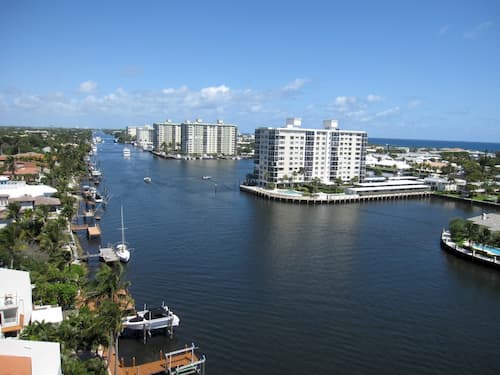
Intracoastal View in Boca Raton, showing waterfront condos and boating -
-
3) Are there any natural hazards to be aware of?
Natural hazards such as flooding, hurricanes or forest fires? Can you get insurance for these hazards and protect your investment? See Insurance costs below.
-
4) Property Management
If you are buying a home that is a long distance from where you live, you should also inquire about property management resources. If you are in a planned unit development there may be options that include onsite management. If not, you can hire someone to periodically look after your property when you are not there.
-
Financial Considerations:
1) Get Pre-approved and Understand Your Total Costs to Buy and Carry your Second Home – ie Paying for 2 Mortgages
With this current tight market it is almost required to obtain a pre-approval (not just a pre-qualification). If a home comes on the market that is a nice update and / or well priced you might be in a multiple offer situation and you will absolutely need that for your offer to even be considered. Many listing agents will also want to see that with an offer (or proof of funds if you pay cash).
Having a solid understanding of your budget and total costs – including a pre-approval where you have discussed your entire situation with a lender are also the best ways to know you are prepared and ready to buy a second home.
Visit my How Much House Can I Afford page and main Mortgage Financing Center section for descriptions, forms, checklists and calculators to help you get prepared.
You have to be able to qualify for 2 mortgages. Financing for a second home typically requires 10 to 20 percent down payment, and of course you have to meet credit standards and debt-to-income requirements, and provide documents for income and asset verification. Banks consider second home loans riskier and they will scrutinize more.
2) Factor in Additional Costs:
If you want to hire someone to check your home or condo on a regular basis to make sure there are no water leaks, or other problems.
3) Insurance for Second Homes and Florida Hazards:
Second home insurance may be more challenging than for primary residences. Florida’s coastal areas and all of Florida actually are susceptible to hurricanes, wave surges and flooding. Hurricane and wind insurance are higher than homes that don’t require it, plus you will need additional flood insurance if you are buying near the coast and /or in a flood zone which could be near a river or any low-lying areas.
4) Rental Considerations for your Second Home
Regarding the previous point about qualifying for 2 mortgages, the bank will qualify you based on you paying for both properties in full. If you decide to rent out your home part of the year or on an annual basis, understand that the rental amount may not fully cover your costs to carry the home. Country Clubs, subdivisions and condominiums all have some rental restrictions when you purchase and also if you want to rent out your home.
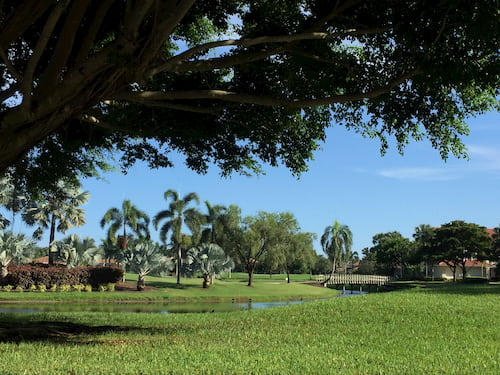
Golf Course View showing Condos, lake and bridge 5) Fees and Carrying Costs for Vacation Homes
(a) Purchase and Carrying Costs:
Make sure you understand all the fees that will you will incur with your out-of-area-purchase. Florida has transfer taxes for second homes as well. Property taxes will run higher here for second homes because there are no caps for increases in market value and assessments each year as there are on primary residences.
Florida primary residences have a 3% cap on increases (or the CPI whichever is lower). Make sure you understand how they can increase. You may also have lower primary residence taxes in your area, so you should be aware of how they compare to your main home. In case you were using your home as a primary residence and then decided to make it a second home, the County Property Appraiser’s office will require you to notify them that the status changed so your property taxes will increase.
(b) HOA Fees and Restrictions:
If you’re purchasing a home in a subdivision or country club, each subdivision will have an HOA or Home Owners Association. Their fees include use or maintenance for pools, tennis courts, common areas and neighborhood maintenance, and clubhouses. Country clubs will have additional fees for their golf and club amenities. These will be considered part of your total house payment for qualifying for your mortgage. Also understand that there may be increases over the years for general CPI but also additional assessments if they propose any improvements. It’s a good idea to ask the association before you purchase if they are planning any improvements or assessments.
(c) HOA Restrictions:
Be sure to review the associations bylaws, covenants and restrictions. Parking spaces may be an issue especially in beach condos where there is very limited parking. If you are considering renting out your home part of the year, most associations have restrictions about having to own the property for a year or two before being able to rent it.
6) Tax Consequences of Second Homes
Be sure to check with your banker and CPA / Financial advisors regarding the tax consequences for your situation when purchasing a vacation home.
7) You might have some additional costs you have to cover.
View South Florida and Treasure Coast Vacation Homes:
Port St Lucie, Stuart, Palm City Ocean Access Homes
Jensen Beach Homes and Condos
Port St Lucie Golf and Country Clubs
Tip: this article will be expanded further if you want to bookmark the page.